Basement Framing Complete with Full Living Layout
Most basements sit unfinished for years - not because homeowners don't want the space, but because figuring out the layout feels overwhelming. Where do the bedrooms go? How do you fit a bathroom without losing square footage? That's exactly where solid framing work makes all the difference. It's the stage where a raw concrete box starts looking like a real home.
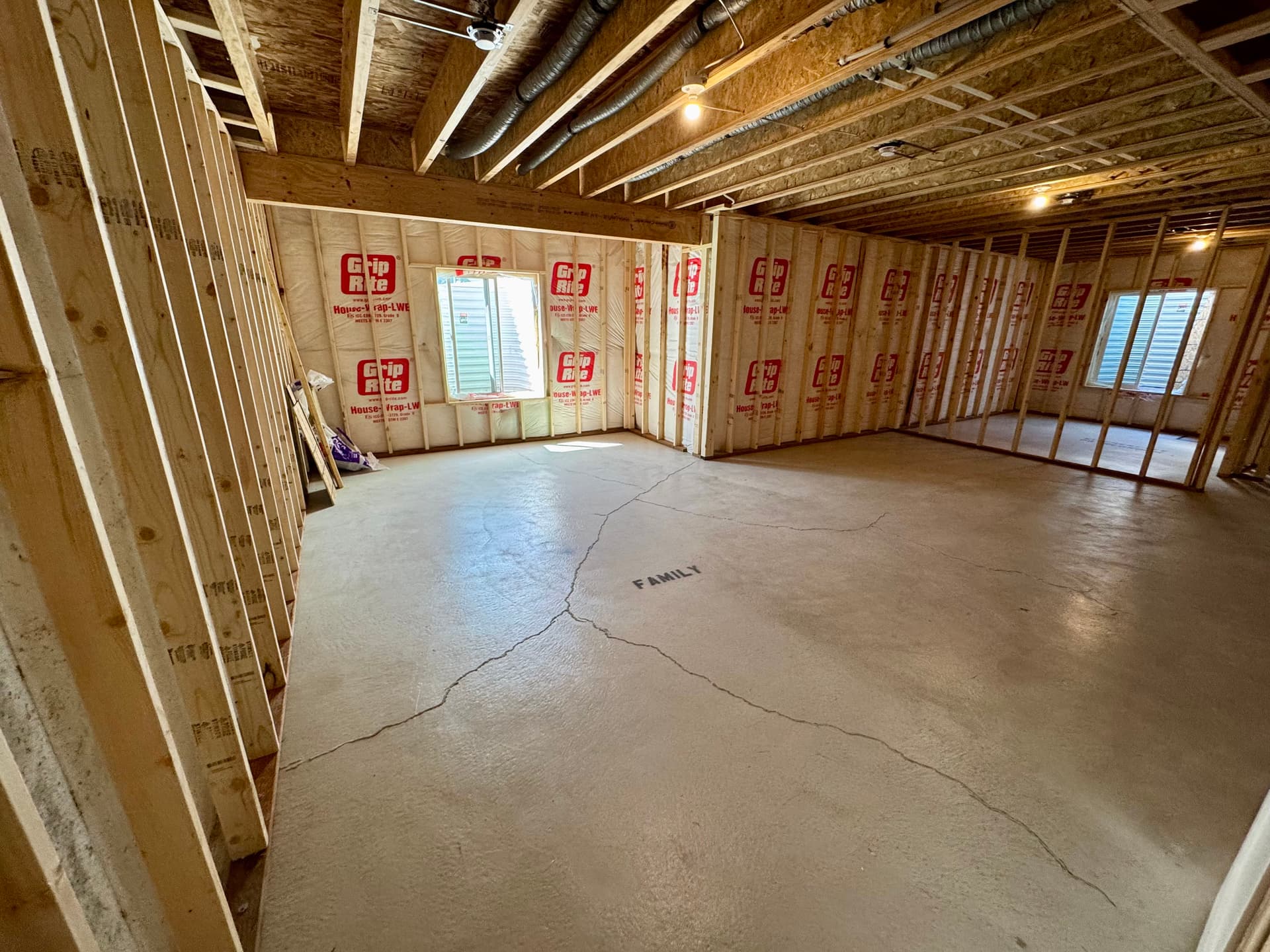
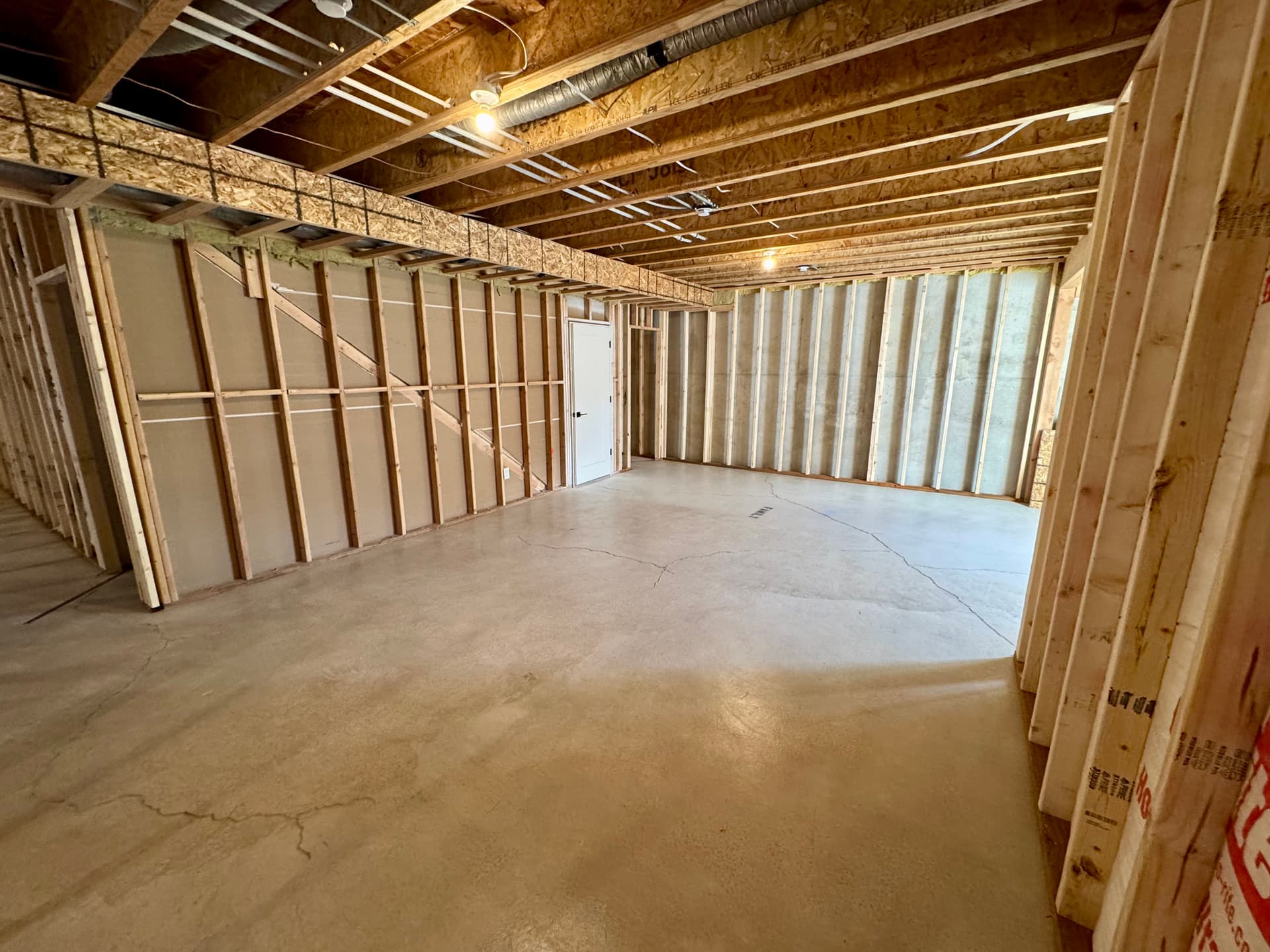
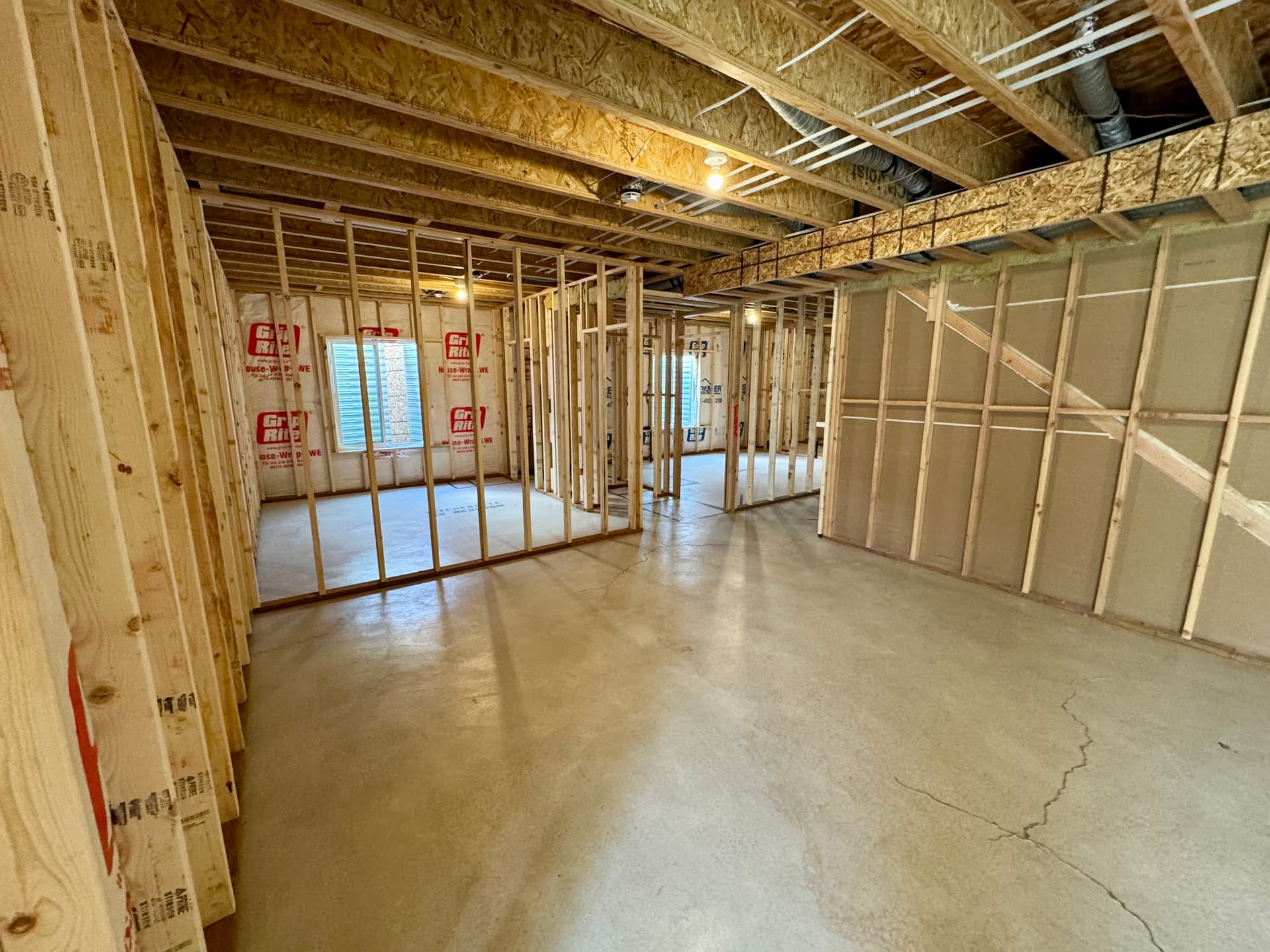
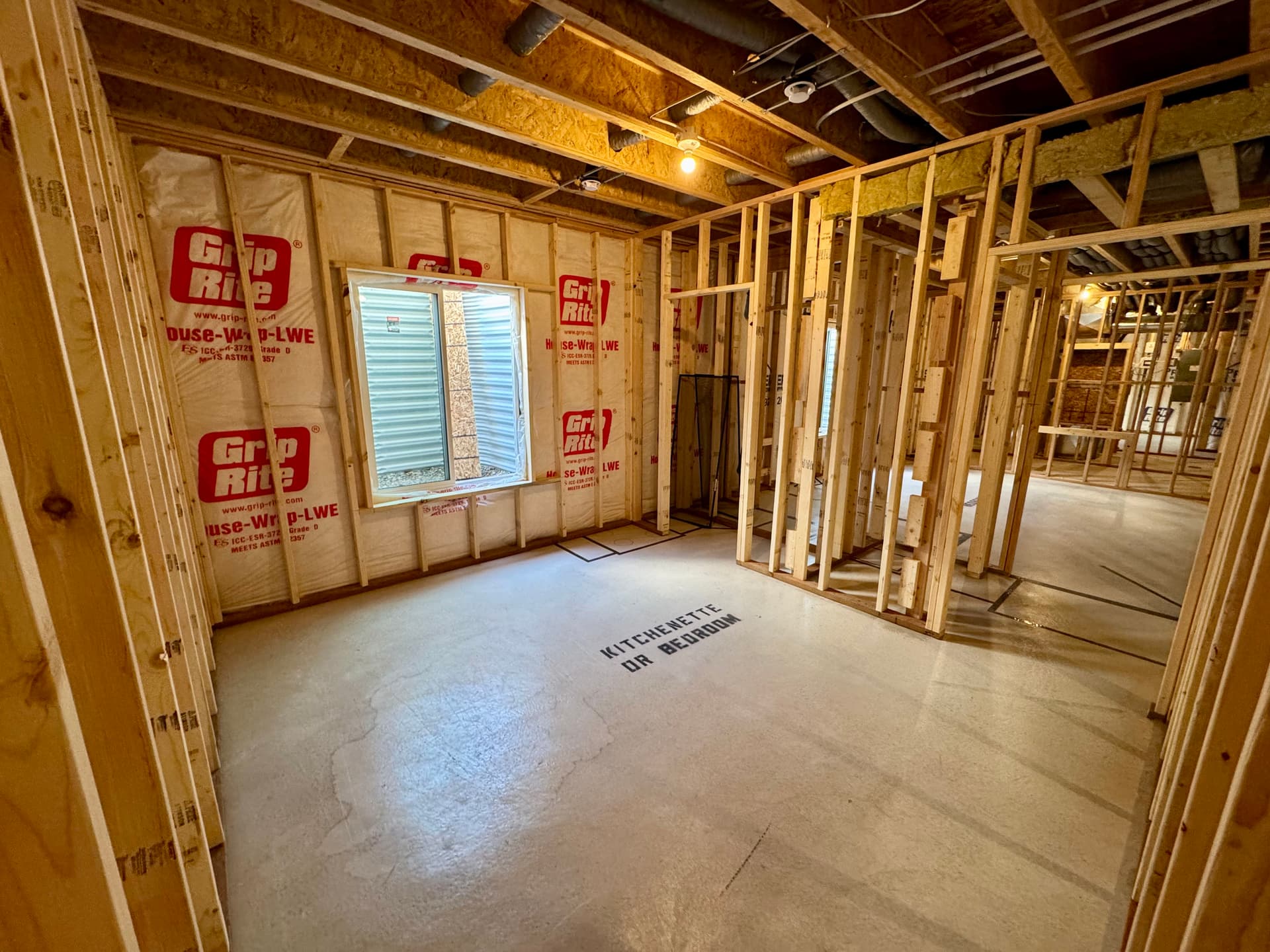
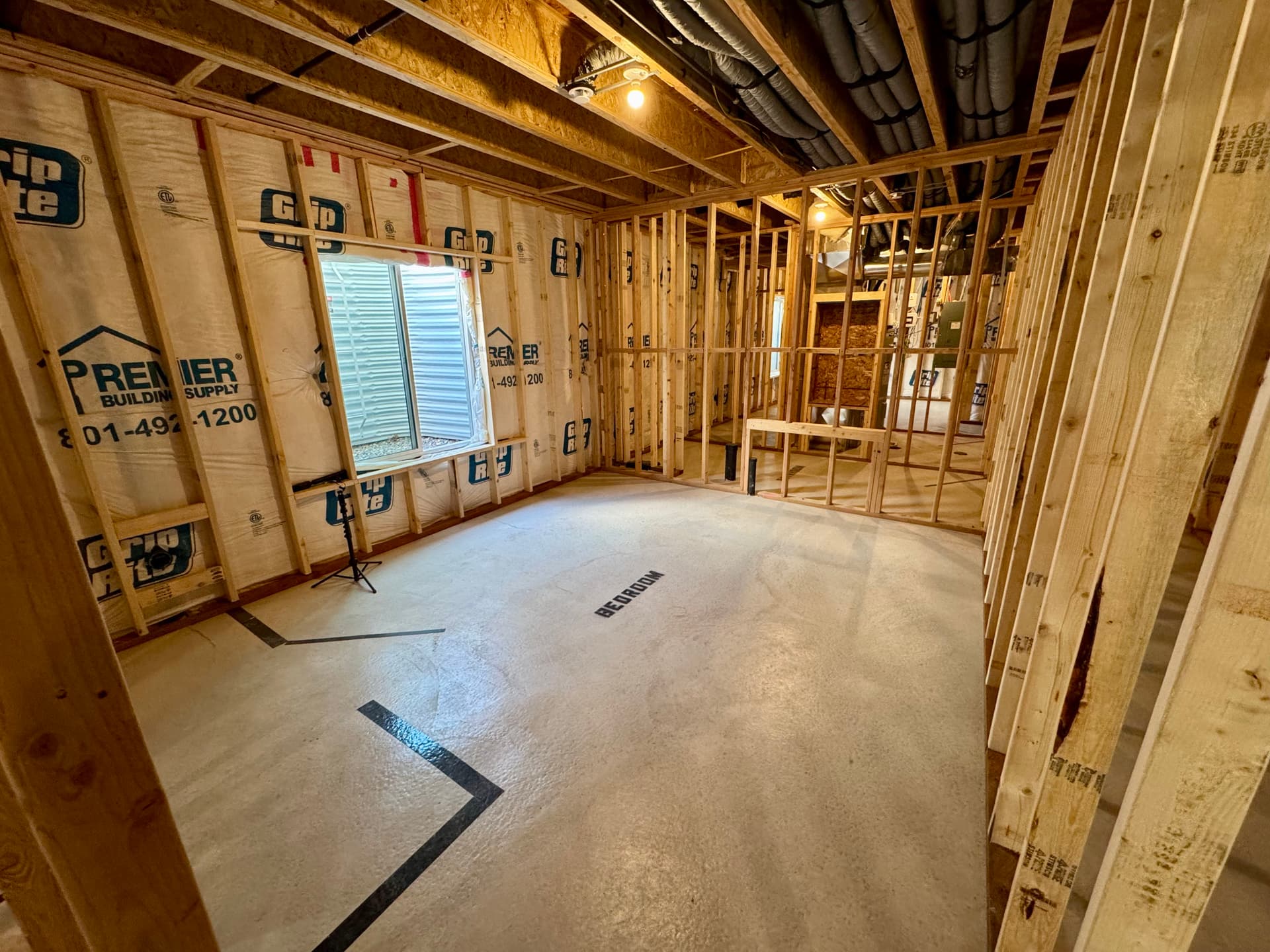
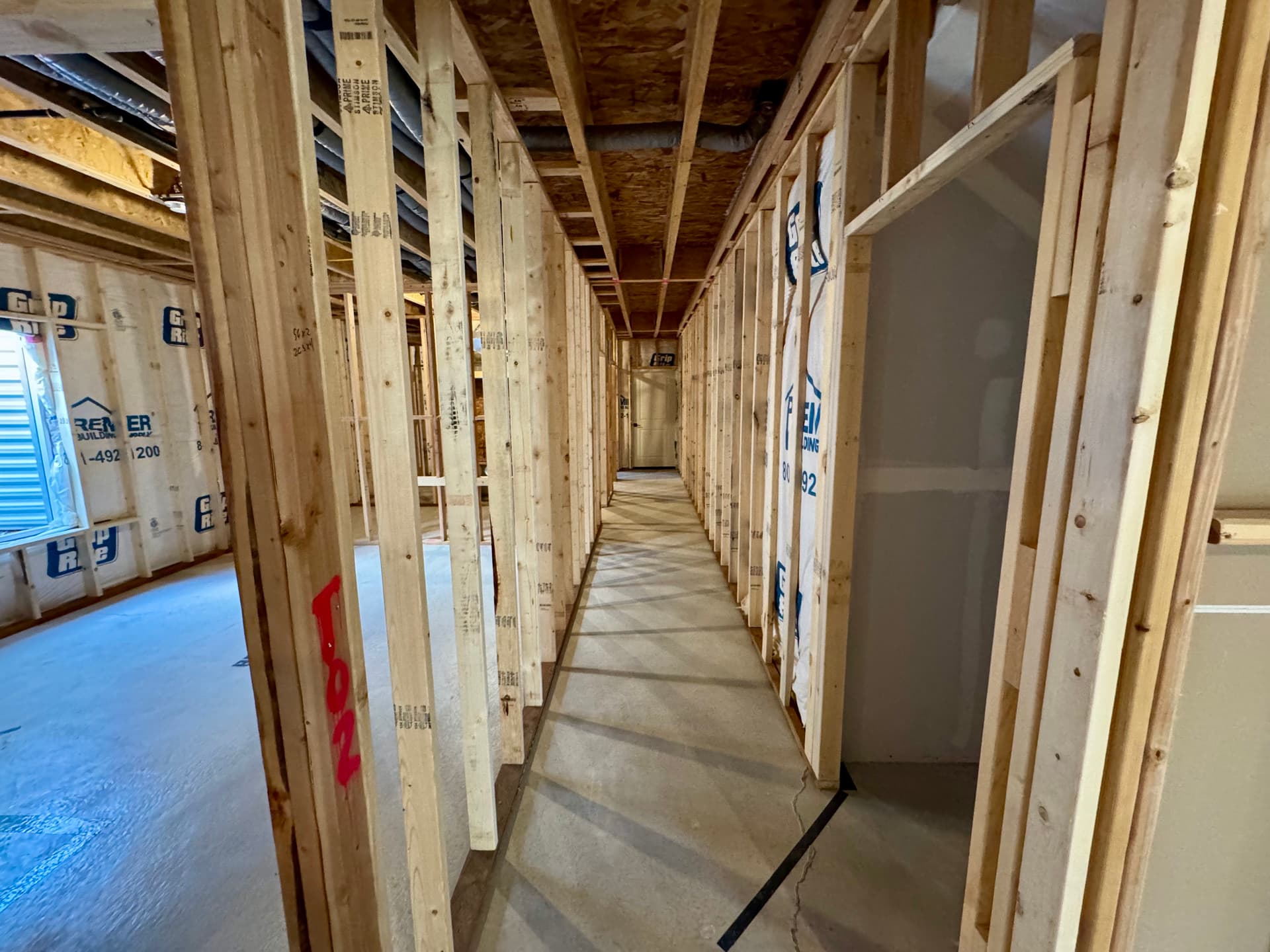
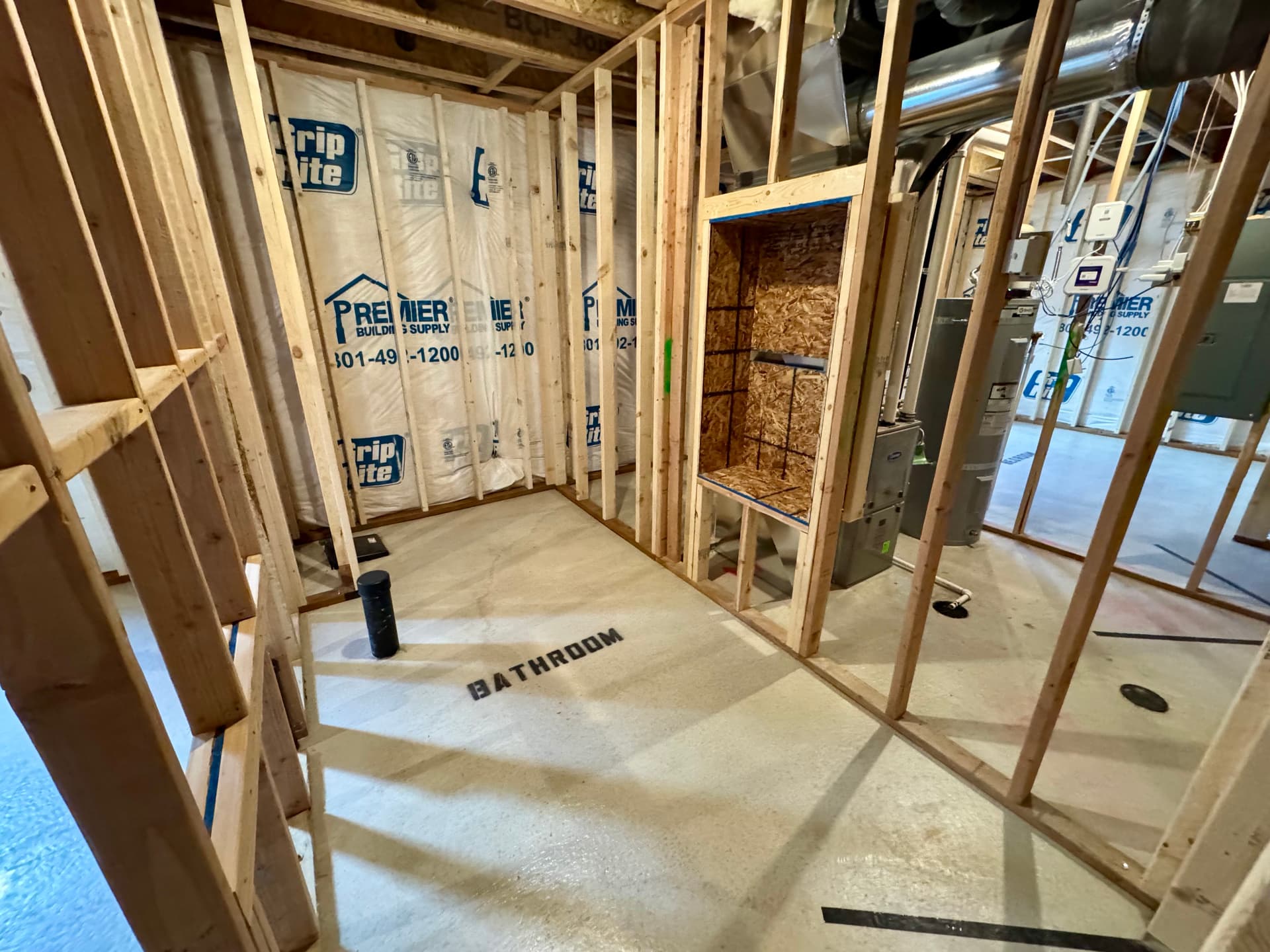
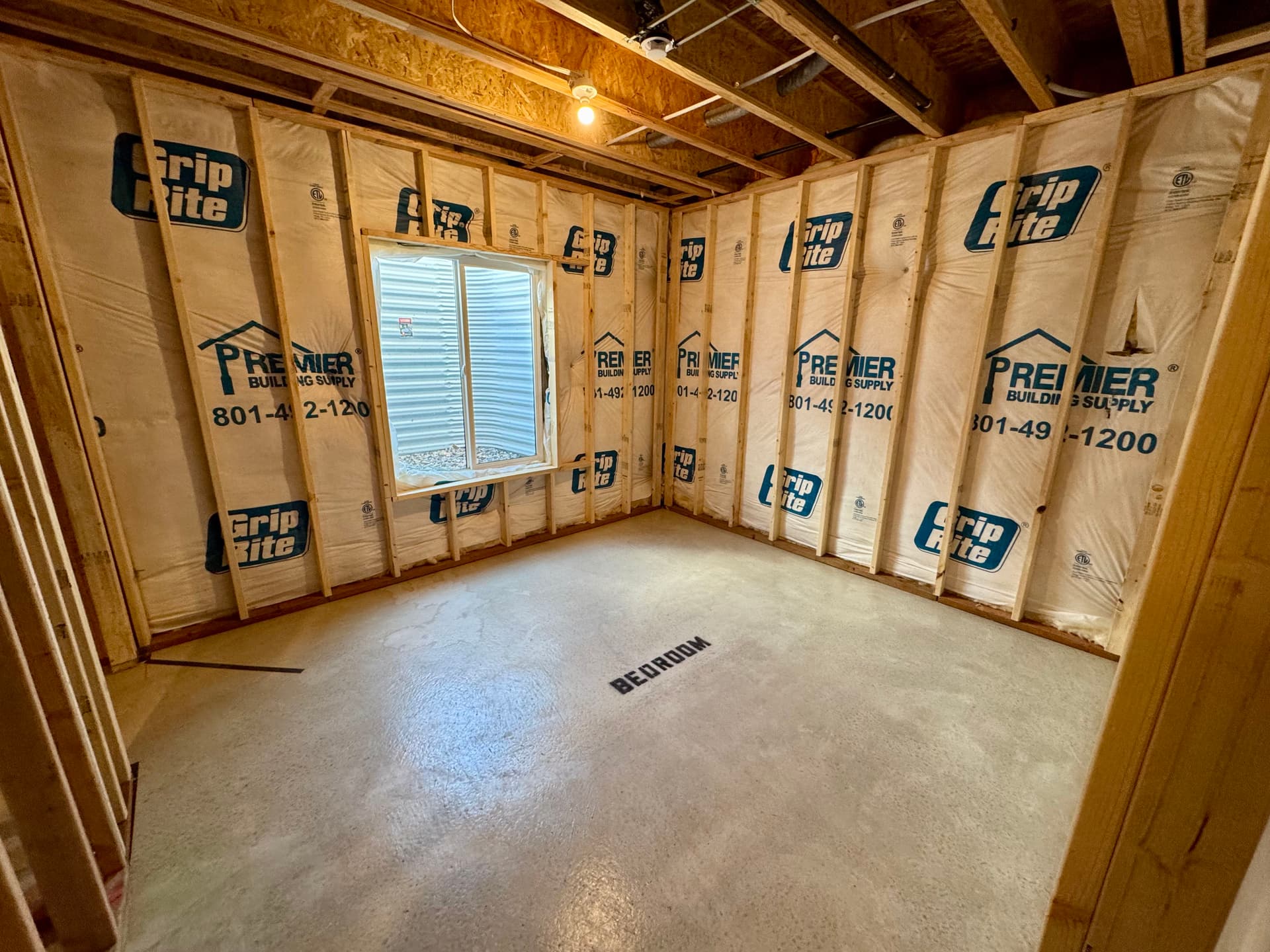
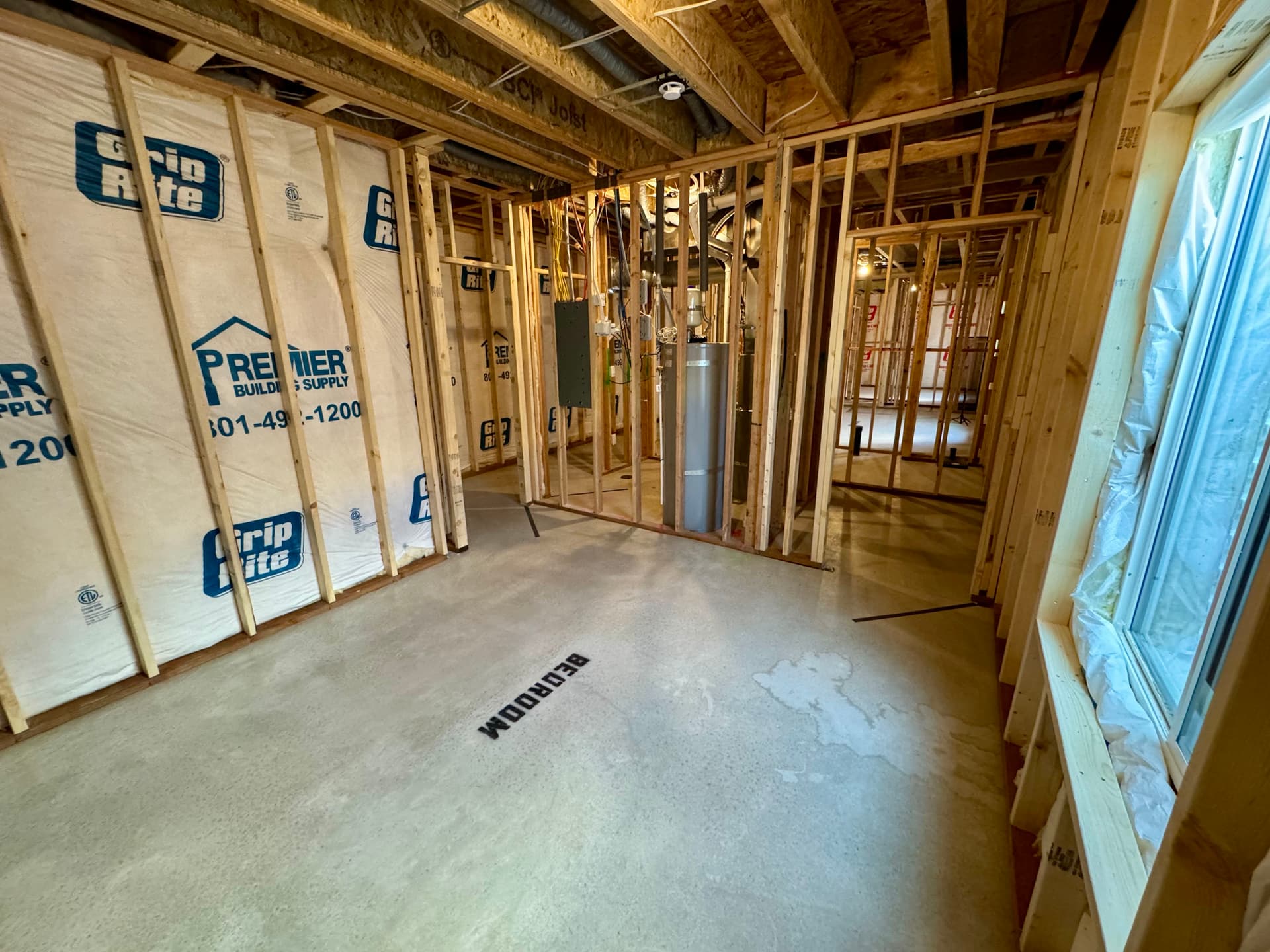
This basement is a good example of what thoughtful planning looks like at the framing stage. We've got a dedicated family room, multiple bedrooms, a bathroom, and even a flexible space labeled for a kitchenette or bedroom depending on what the homeowners decide. Each room is clearly defined, the wall lines are straight, and the layout flows in a way that actually makes sense for everyday use.
One thing worth pointing out - the room labels marked right on the concrete floor. That's not just for show. It keeps everyone on the same page during the build. Framers, electricians, plumbers - they're all working from the same plan. It cuts down on miscommunication and makes sure nothing gets missed before the walls close up.
The framing on the exterior walls is tight against the house wrap, which is a good sign for insulation and moisture control down the road. The corridor framing that runs the length of the basement gives you a proper hallway - not just a walkthrough between rooms. Details like that are what separate a well-planned basement from one that feels thrown together after the fact.
Basement framing is the foundation of everything that comes next. Get it right here and the rest of the finish work goes smoother, faster, and with fewer surprises. This one is set up well.