Rotted Deck Stair Stringers Replaced Without Losing the Original Trex
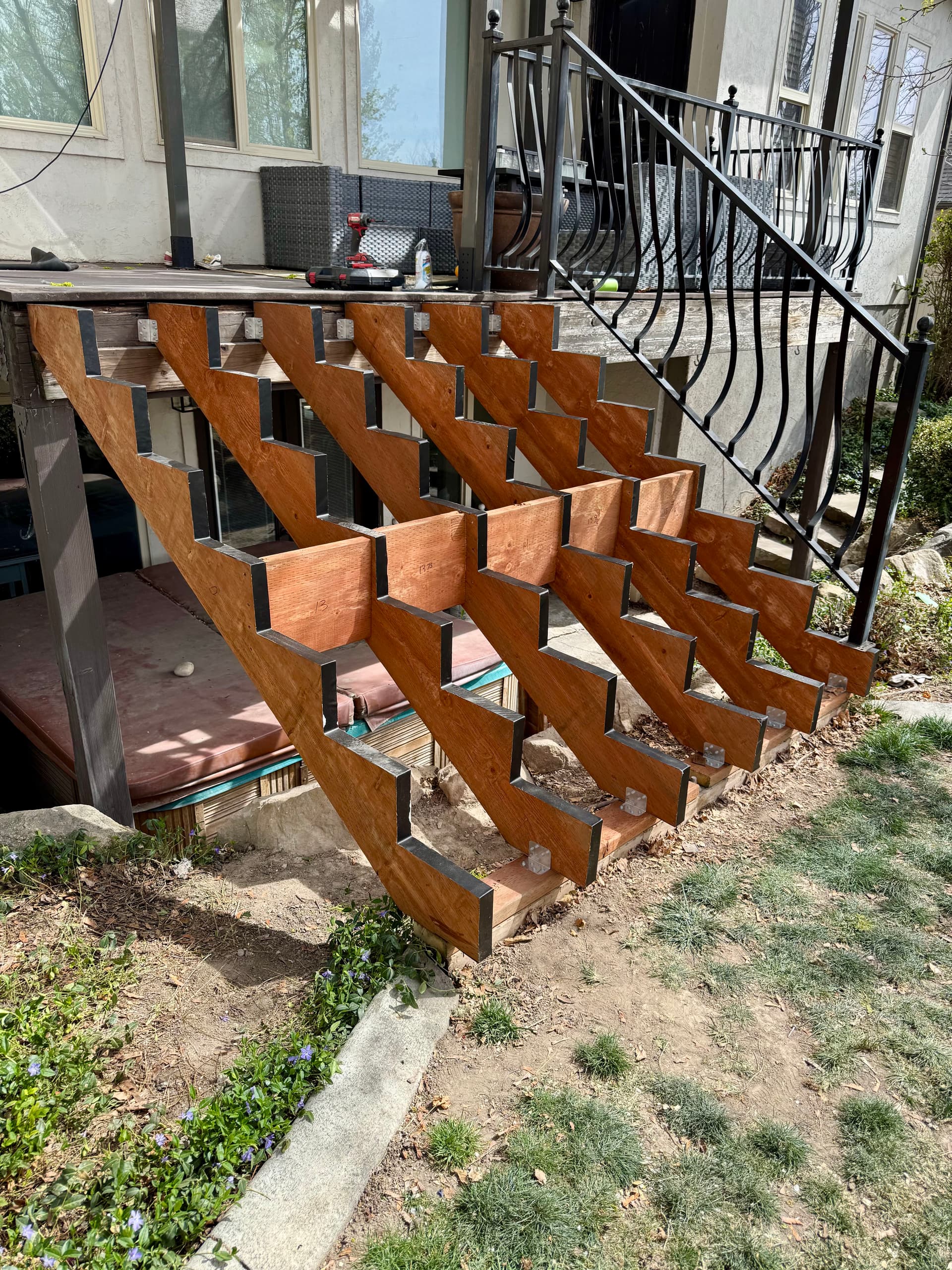
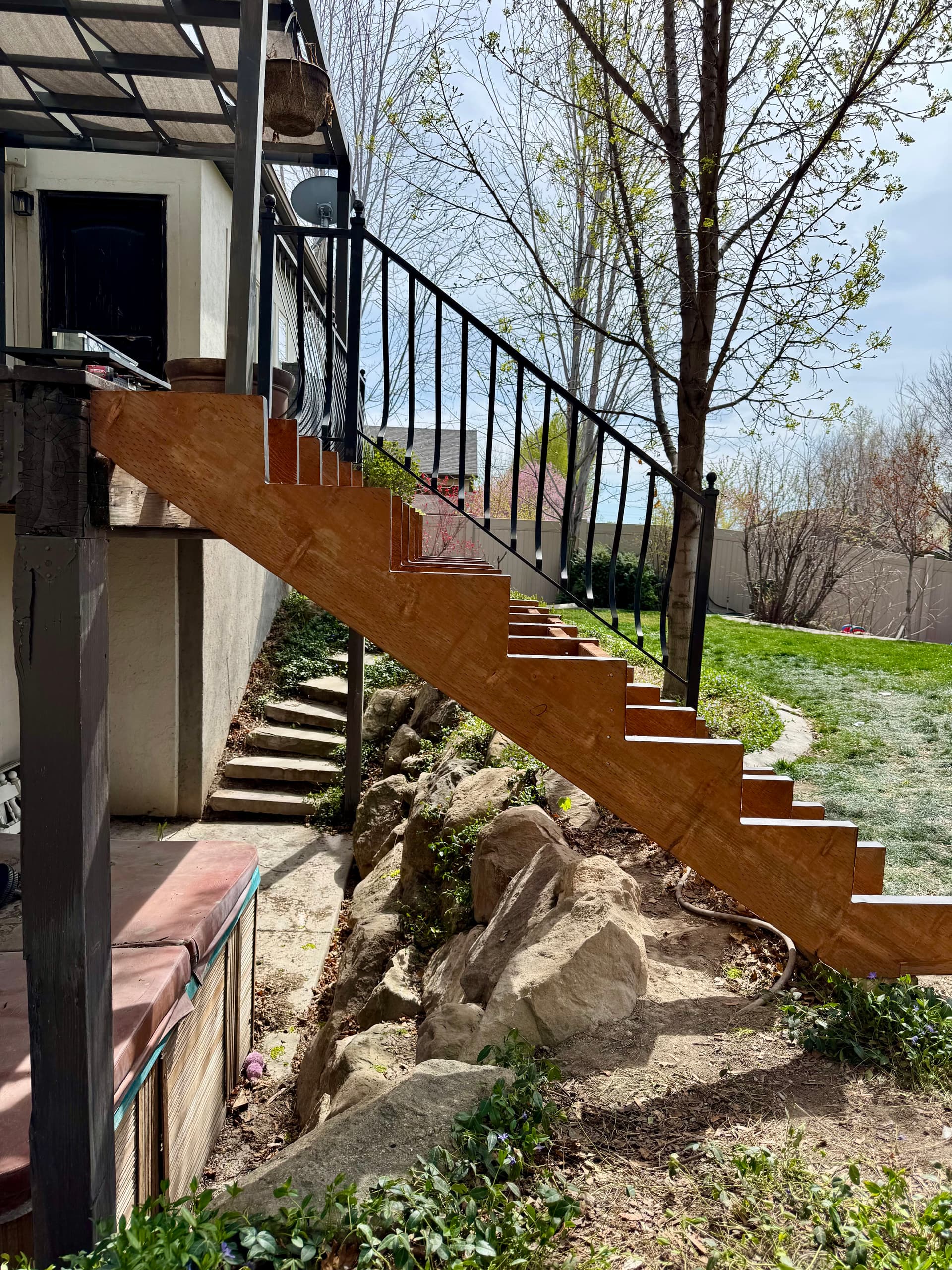
When deck stairs start to sink at the bottom, it usually means one thing - the stringers are done. Wood rot works quietly. By the time you notice the steps shifting or feel that soft give underfoot, the structural damage is already well along. That's exactly what we were dealing with here.
The old stringers had rotted out enough that the bottom of the steps had actually sunk. Not just settled a little - fully dropped. At that point, a patch job isn't going to cut it. We pulled everything out and got fresh stringers in.
Here's what made this one a little more precise than a straightforward swap: the homeowner had Trex decking on the treads. That stuff isn't cheap, and it was still in good shape. So we made sure the new stringer spacing matched the original layout exactly. Every tread went right back on without modification. No waste, no unnecessary replacement costs.
That's the kind of detail that matters on a job like this. It's easy to just build new and tell the homeowner to buy new treads. It takes more care to measure, plan, and execute so the existing material fits perfectly. We think that's the better way to do it.
Deck stairs take a beating - constant foot traffic, ground contact, moisture. If yours feel soft, look uneven, or have any visible shifting at the base, it's worth getting eyes on the stringers sooner rather than later. Catching it early makes for a simpler fix.